Group, the Missing Piece in Your Anxiety Toolkit
It’s a frustrating spot to be in: you haven’t "hit rock bottom," you’re not in crisis, but you feel cornered by everyday stress and chronic worry. It shows up as constant overthinking, trouble concentrating, self-doubt, and trying to manage anxiety that sneaks into your routine despite your qualifications and lived values.
As a licensed therapist in Oakland, California, I often hear this exact story on consultation calls. After an initial assessment, I sometimes have to ethically tell potential clients: "You don't actually meet the clinical criteria for an anxiety disorder, but you could definitely use real, structured coping strategies."
Many high-achieving women share how hard it is to find professional support when you're looking for preventive stress management rather than full-scale clinical treatment. Self-help books and apps offer a good starting point, but they often leave you sitting alone in your living room, wondering why the tools aren't sticking when stress hits in real life. AI chats and social media can also offer quick tips, but they provide generic advice that misses the nuance of human experience or a balanced perspective.
That middle ground, between passive self-help and individual talk therapy, is where an Anxiety Skills Group fits.
What is an Anxiety Skills Group?
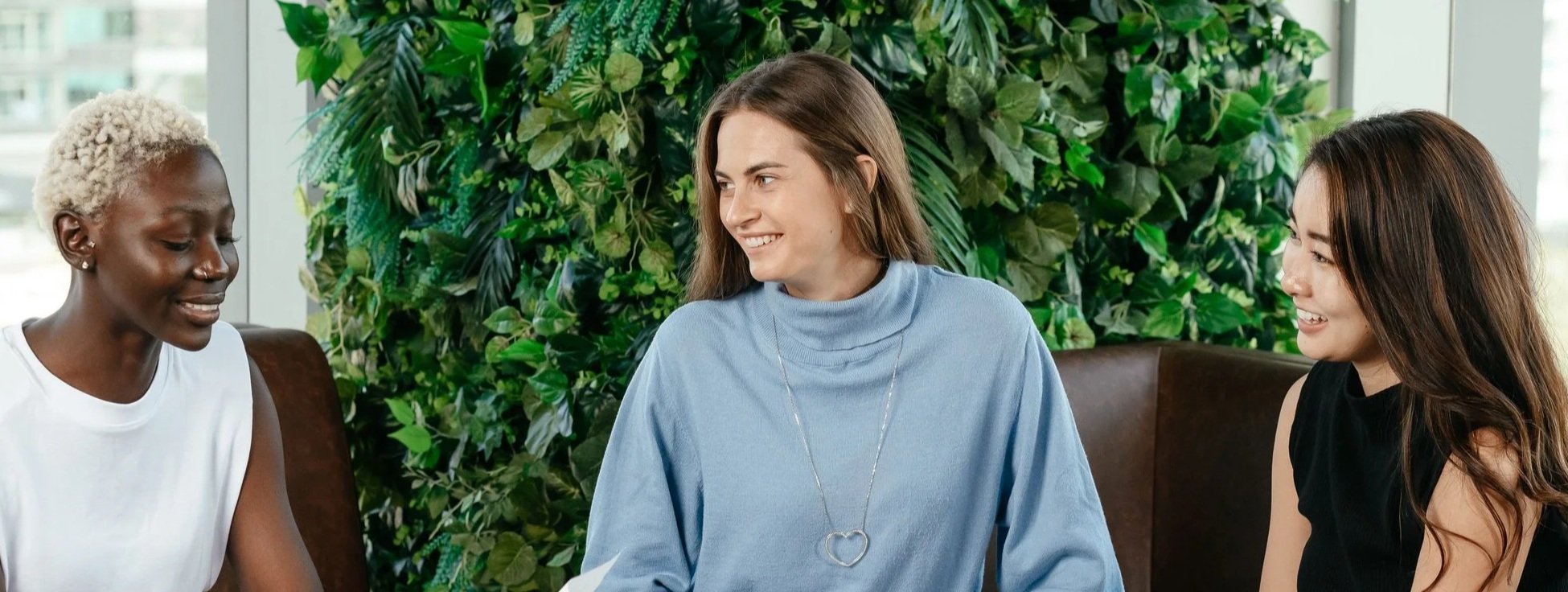
An Anxiety Skills Group brings together 6 to 8 women experiencing mild stress, overthinking, or subclinical anxiety. Meeting weekly online, we focus on learning actionable tools and, more importantly, practicing them in real time with the support of peers and a licensed therapist facilitator.
We draw from the gold standard of evidence-based practices:
Cognitive Behavioral Therapy (CBT):CBT skills for anxiety that help rewire automatic worry thoughts and self-doubt.
Mindfulness: Grounding techniques to pull you into the present moment when your mind spins out.
Somatic Strategies:Somatic exercises for anxiety to soothe your physical nervous system when stress takes over your body.
How Skills Groups Differ from Individual Therapy
Skills groups and therapy are like apples and oranges, they are both helpful, but they serve entirely different purposes.
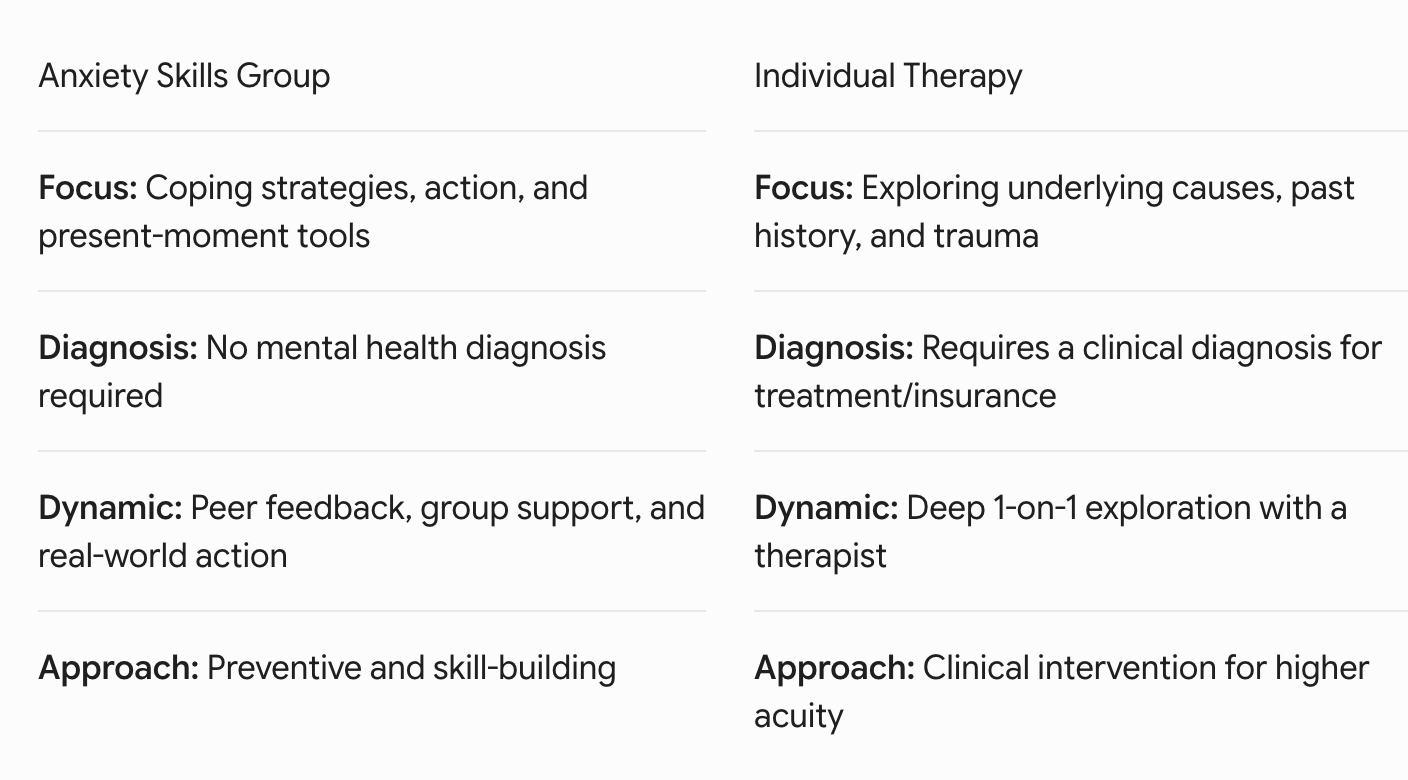
Skills groups aren't "less than" therapy; they are a targeted solution for a specific need (and if during our group it becomes clear you need a higher level of care, I will recommend individual, couples, or specialized treatment.)
Why Group Work Works (The Psychology Behind It)
There is a unique flow and understanding that happens when you bring 6–8 women together to work on managing anxiety:
Universality: Peer-reviewed research shows that universality the realization that you are not alone in your specific internal struggles, is one of the most powerful therapeutic factors in psychological relief. It instantly cuts through the shame and isolation that fuels anxiety.
Co-Regulation: Somatic psychology highlights how our nervous systems respond to others. Practicing calm in a compassionate, therapist-facilitated group environment actually helps recalibrate your body's stress response faster than practicing alone.
Real-World Experiments: Trying a new coping mechanism rarely goes perfectly the first time. In our group, you get a safe testing ground to try skills, receive peer feedback, and hold each other accountable for taking action week to week.
Joining the Upcoming Cohort
Starting October 5, 2026, I am opening a 6-week online anxiety skills group for women residing in California and Washington state.
This will be a warm, non-judgmental, and deeply supportive space to build a personal toolkit you can rely on for the rest of your life. Whether you use this group as a standalone preventive tool or as a supplement to your current individual therapy for anxiety, you don't have to navigate overthinking in isolation anymore.
Group Details:
Dates: Starts Monday, October 5, 2026 (Meets weekly for 6 weeks via secure telehealth)
Who It’s For: Women in CA & WA looking for practical anxiety tools or a supplement to individual therapy
Group Size: Capped at 6–8 participants to keep the space intimate and interactive
If you are ready to move past passive self-help, social media, and AI chats to build real relief alongside a supportive community of women, I would love to welcome you.
Click Here to Apply to the Group
Author Bio
Cynthia Dimon, LCSW, is a licensed mental health therapist based in Oakland, CA, serving clients in California and Washington. She creates a warm, affirming, and protected space for women, including women of color, LGBTQ+ professionals, moms, and students . In our work together you will never have to over-explain your identity or lived experience. Cynthia specializes in intergenerational and complex trauma, adult ADHD, anxiety, and relationship challenges.
Cynthia Dimon, LCSW
CA License #29729
WA License #70054404
www.cynthiadimon.com
therapy@cynthiadimon.com
References:
Cuijpers, P., et al. (2016). Psychological treatment of generalized anxiety disorder: A meta-analysis for clinicians. Clinical Psychology Review, 46, 42–50.
Porges, S. W. (2011). The Polyvagal Theory: Neurophysiological Foundations of Emotions, Attachment, Communication, and Self-regulation. W. W. Norton & Company.
Yalom, I. D., & Leszcz, M. (2020). The Theory and Practice of Group Psychotherapy (6th ed.). Basic Books.